
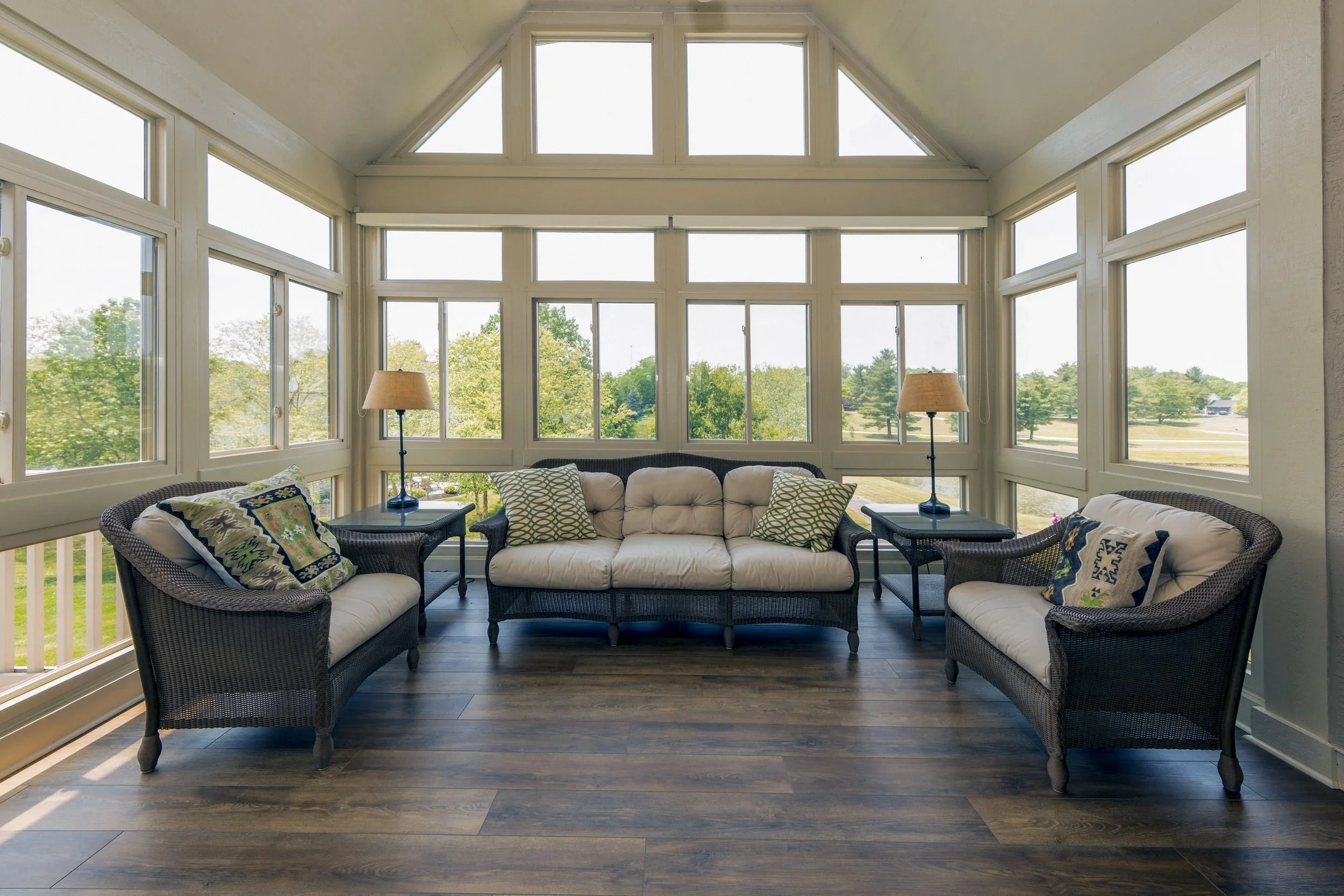
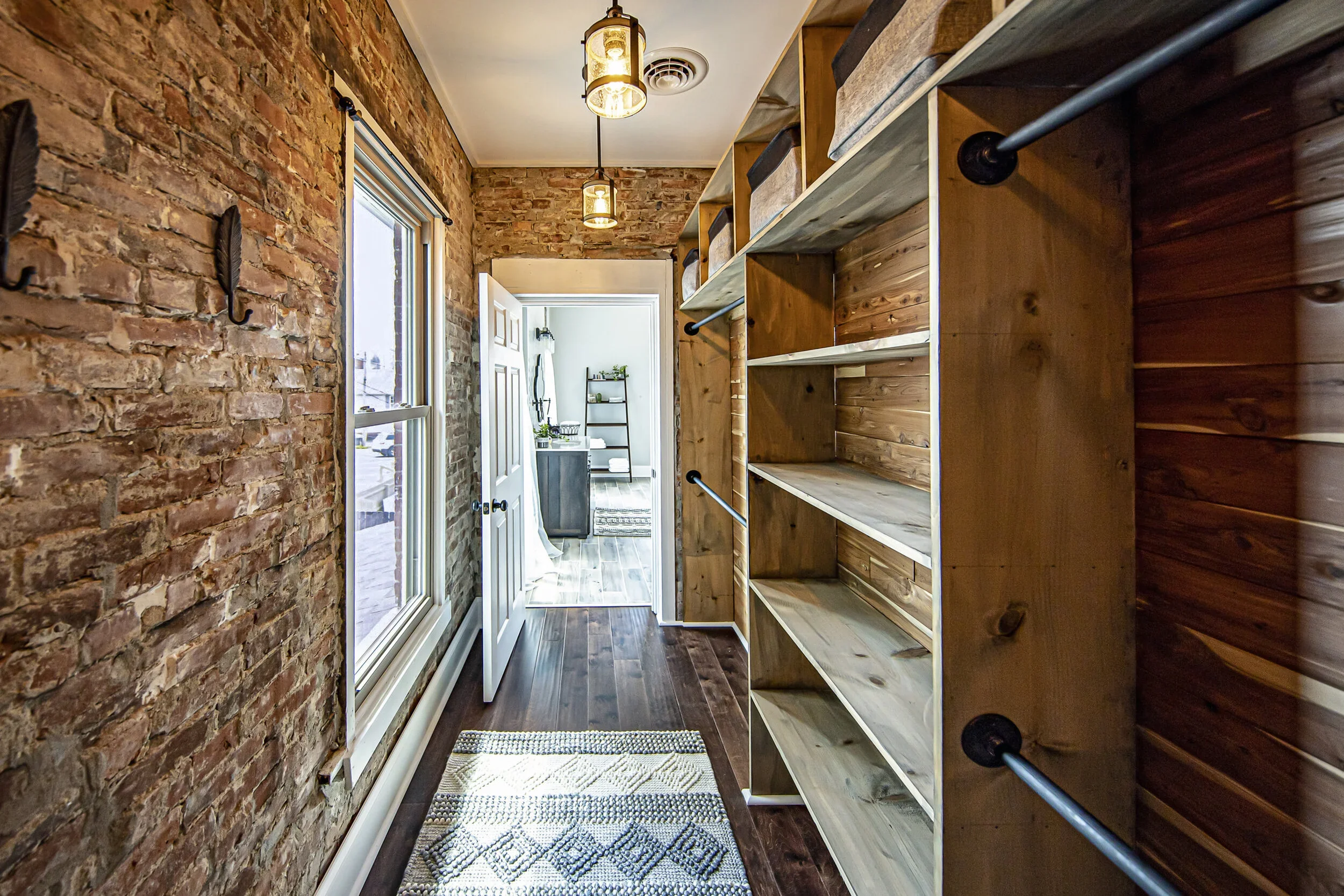
Columbus is one of the more compelling real estate markets in the country right now — a city growing fast enough that both residential agents and commercial developers are competing hard for attention. That competition puts a premium on photography that doesn't just document a property but actively sells it. As a Columbus real estate photographer working across both categories, here's what actually separates these two types of work and why that distinction matters when you're hiring.
What residential real estate photography is actually doing
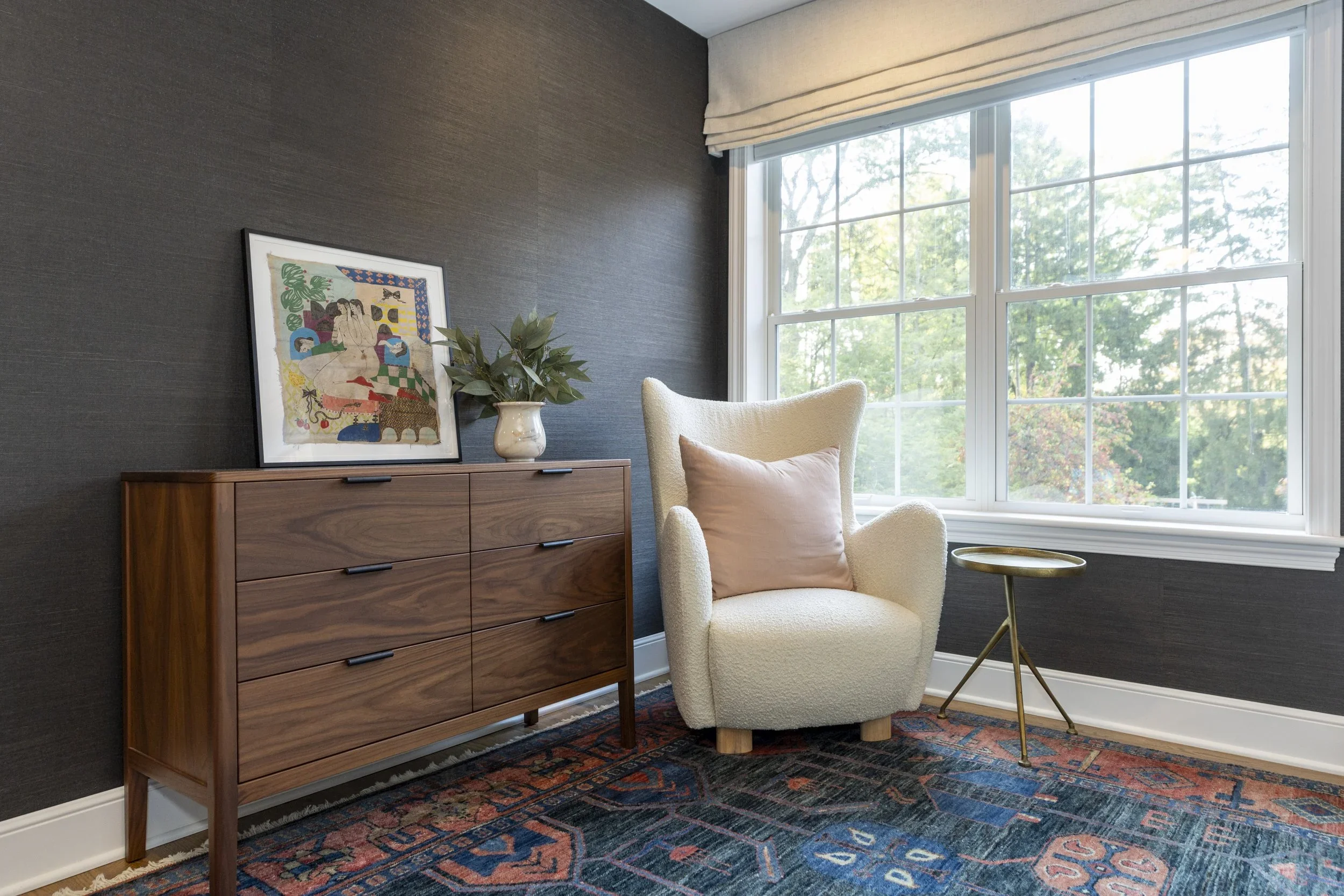
At its core, residential real estate photography in Columbus has one job: help a buyer emotionally connect with a home before they walk through the door. The images need to convey scale, light, and livability — to make someone sitting at a laptop at 11pm think, that's the one.
That means every shot is calibrated around human experience. How does natural light move through this kitchen in the morning? Does the primary bedroom feel like a retreat or a room? Is the backyard something you want to spend a Saturday in? A technically correct photograph that answers none of those questions is failing at its actual purpose.
For residential real estate photography in Columbus, Ohio, my standard deliverable package includes wide-angle interior stills optimized for MLS listings, exterior shots timed to the best available light, detail images of finishes and fixtures that justify the listing price, and twilight photography for properties where the exterior presentation benefits from that warmer, more aspirational look. Drone aerials are available for residential listings where the lot, setting, or neighborhood context adds meaningful value to the presentation — river-adjacent properties, larger suburban lots, and new construction communities in Powell and Westerville all read differently from altitude than they do from the street.
What commercial real estate photography is actually doing
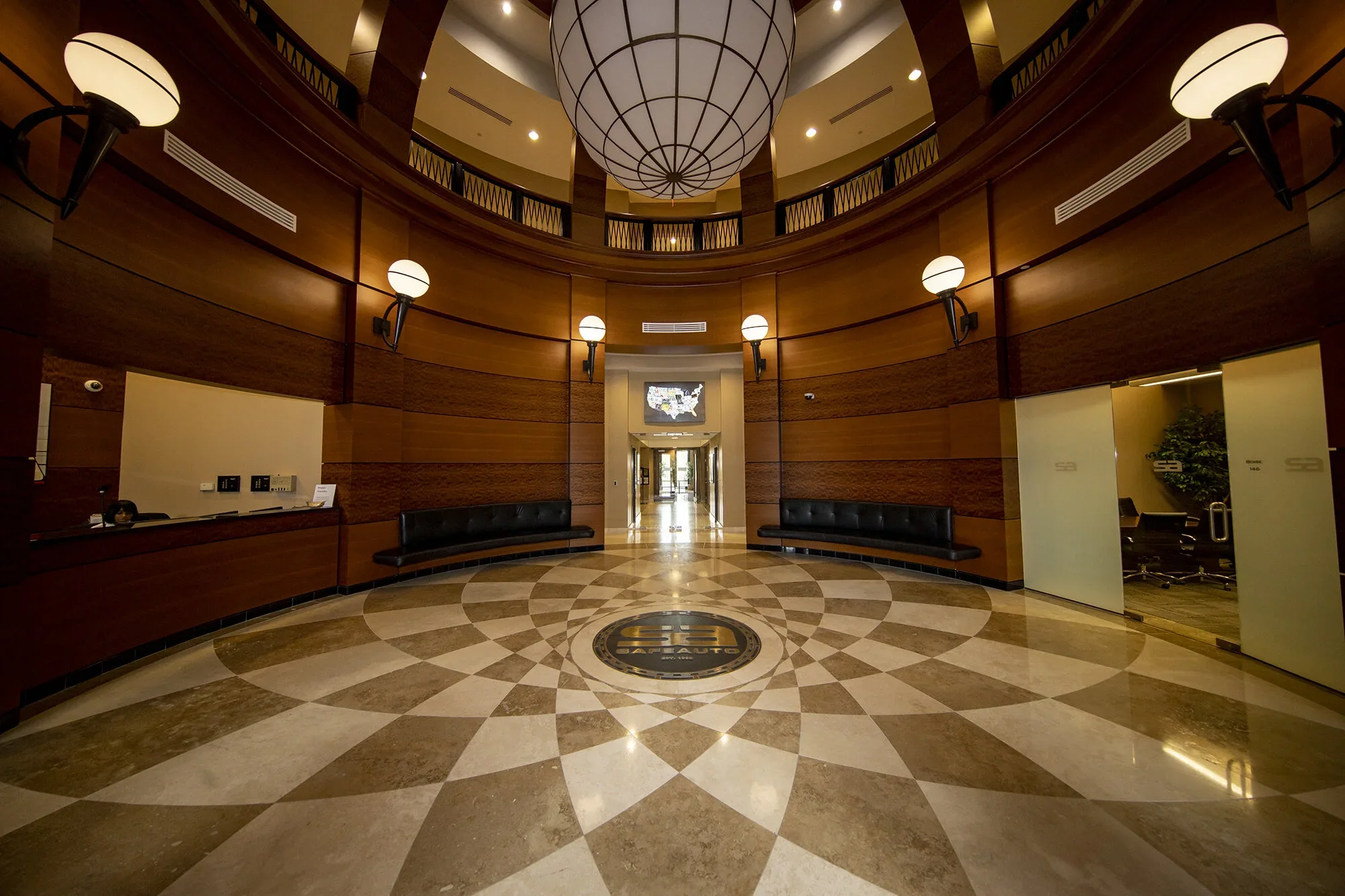
Commercial real estate photography is solving a different problem entirely. The audience isn't emotionally browsing — they're evaluating. A prospective tenant for a Short North retail space, a company considering office square footage in Dublin, or an investor looking at a mixed-use development near Easton isn't asking how the light feels. They're asking: does this space work?
That shift in audience changes everything about how I approach the shoot. Commercial spaces need to communicate function, capacity, and context. What does the floor plan actually allow? How does the building read from the street? What's the quality of the surrounding development? These are the questions the photography has to answer.
Commercial real estate photography in Columbus operates at a larger scale — both physically and in terms of deliverable complexity. A single commercial property might require architectural exteriors at multiple times of day, full interior coverage of every leasable space, drone aerials showing site access and neighboring parcels, and detail shots of building systems and finishes that matter to a commercial tenant evaluating a long-term lease.
Within the commercial category, one of the more distinct engagements I take on is the documentation of historic structures. Columbus has a meaningful inventory of architecturally significant buildings — some actively listed, some under consideration — and I've been commissioned to produce photographic records of these properties with the level of detail and care that preservation and development work demands. Historic documentation isn't listing photography. The brief is completeness and accuracy: capturing structural character, material detail, and spatial relationships in a way that serves architects, preservationists, and developers making long-term decisions about a building's future. It's methodical work, and the images carry a different kind of weight than a standard commercial shoot.
Drone photography and videography
Aerial coverage has become an expected part of serious real estate photography — but the way it gets used differs significantly between residential and commercial work, and between still photography and video.
On the residential side, drone stills are most valuable when the property has something worth seeing from above: a large lot, a distinctive setting, proximity to water or green space, or a neighborhood context that's more legible from altitude. Not every listing needs aerials. When they're warranted, they add a perspective that no amount of ground-level photography can replicate.
On the commercial side, drone videography becomes a genuine storytelling tool. A slow orbital pass around a mixed-use development communicates scale and ambition in a way that stills alone can't. A low approach to a warehouse campus along the 270 corridor shows site access, loading infrastructure, and surrounding context simultaneously. For developers presenting to investors or municipalities, aerial video is often the most persuasive single asset in the entire documentation package.
For historic structures specifically, drone coverage provides an invaluable record of rooflines, upper-story facades, and architectural features that are otherwise inaccessible — details that matter enormously to preservation architects and structural assessors but are invisible from the ground.
I offer both drone stills and drone videography as standalone services and as integrated components of broader real estate and architectural documentation packages. All aerial work is conducted in compliance with FAA Part 107 regulations.
Where Columbus makes things interesting
One thing that makes shooting real estate in Columbus specifically compelling is the range of the market. German Village rowhouses. Short North mixed-use. Franklinton warehouse conversions. Dublin office campuses. New construction in Powell and Westerville. Each context has its own visual language, and a photographer who treats them all the same is missing what makes each one worth shooting.
German Village rewards patience — the light in those brick rowhouses arrives late and leaves early, and the best images from that neighborhood are the ones that waited for it. Franklinton warehouse conversions are defined by their industrial scale — the photography needs to honor that scale rather than minimize it. Commercial shoots along the 270 corridor are about communicating accessibility and infrastructure. Each neighborhood in Columbus has a dominant quality that the photography should lead with, not work around.
The question of overlap
There's genuine middle ground between these categories — boutique mixed-use properties, high-end residential developments being marketed to investors, adaptive reuse projects with both commercial and residential components. These are the shoots I find most interesting precisely because the brief is more complex. You're serving multiple audiences with a single set of images, which means every shot has to work harder.
For developers and agents working on properties like this in Columbus, the conversation I always start with is: who are we actually trying to reach with these images, and what decision are we trying to influence? The answer to that — not the property type — is what shapes the creative approach.
How to know which approach you need
If you're a residential agent in Columbus looking to differentiate your listings in a competitive market, the investment in professional photography is one of the clearest ROI decisions in real estate marketing. Homes with professional images consistently sell faster and at higher prices — that's documented across market after market, and Columbus is no exception.
If you're a developer, broker, property manager, or preservation organization on the commercial or historic side, the calculus is slightly different but the conclusion is the same. The cost of poor visual representation in a commercial leasing or sales process — a prospect who didn't pursue a showing because the images didn't communicate the property's potential — is real and quantifiable.
Either way, I'd welcome a conversation about what your specific property needs. Reach out through harryacosta.com or call directly at (614) 571-0142.